

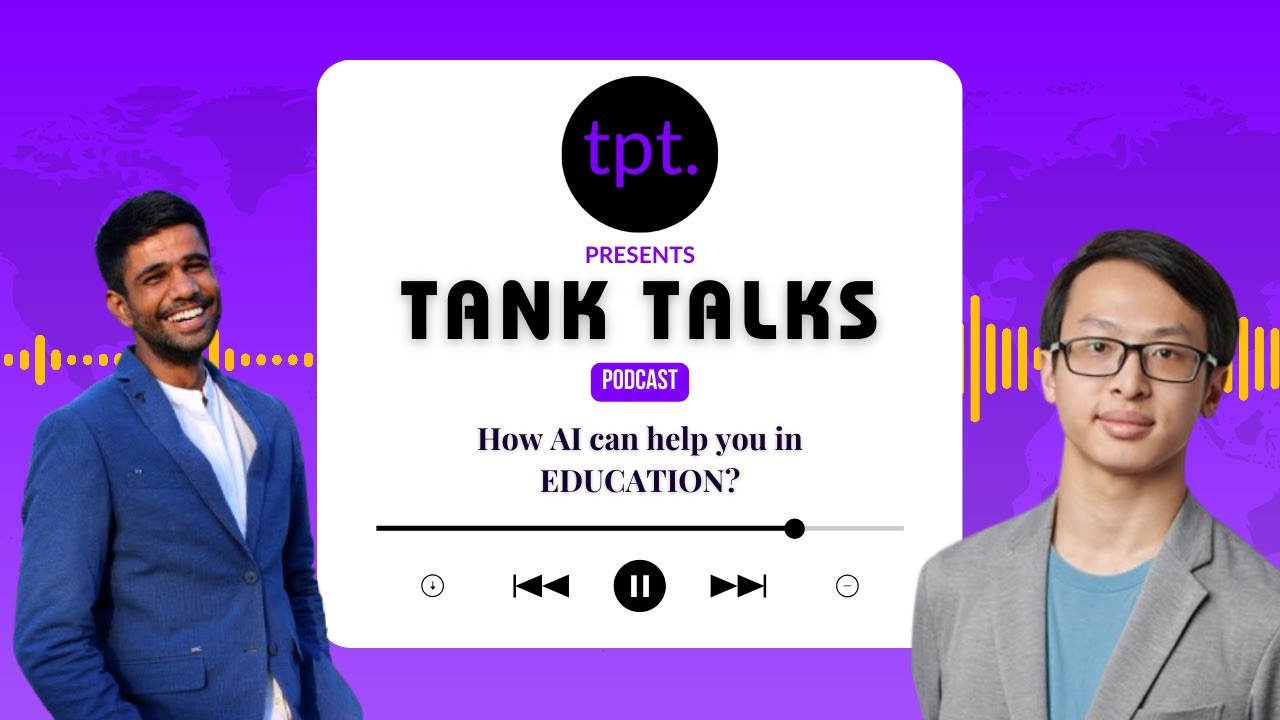
In a rapidly changing world shaped by technology, artificial intelligence is no longer a distant idea. It is now a powerful force influencing how people learn, work, and solve problems. In a recent conversation hosted by The Policy Tank Foundation, founder Pranav Sharma spoke with Ryan Nicholas Leong Wieren from GeniusU, Singapore’s first GENIUS Generation Youth Coach and International Association of Top Professionals’ Top Youth Coach of the Year 2024, about one important question: How can AI play a bigger role in education?
The discussion explored the future of learning through the lens of SDG 4: Quality Education, while also raising an equally important concern: how can society use AI responsibly without weakening human thinking, creativity, and judgment?
Education in the Age of AI
Pranav Sharma opened the conversation by explaining the mission of The Policy Tank Foundation. The organization works at the intersection of public policy, citizens, governments, and academia, helping people better understand how policy formulation and implementation take place. By encouraging informed public participation, the foundation aims to strengthen accountability and awareness on issues such as education, health, governance, and international relations.
Against this backdrop, the discussion on AI and education became especially relevant. Education is not just about access to information anymore. It is increasingly about preparing young people for a world defined by uncertainty, complexity, and rapid innovation.
Ryan described today’s career landscape as one marked by volatility, uncertainty, complexity, and ambiguity. In such an environment, traditional education systems may not be enough. Students need more than technical knowledge. They need critical thinking, creativity, leadership, adaptability, and problem-solving skills.
This is where AI has the potential to become a meaningful educational tool.
AI as a Tool, Not a Replacement
One of the central ideas Ryan emphasized was simple but important: AI is a tool. It is not meant to replace human intelligence, ethics, or wisdom. Instead, it should be used to support human development.
AI can help make education more interactive, personalized, and accessible. It can generate learning content quickly, create simulations, offer feedback, and expand the scope of classroom discussion. However, Ryan also stressed that AI must be shaped by the right ethics, policies, and transparency. Governments, institutions, and companies must ensure that AI systems are designed responsibly so that users understand their limitations, possible biases, and the intentions behind their design.
In other words, quality education in the age of AI is not only about using advanced tools. It is also about teaching students how to use those tools wisely and ethically.
AI and the Promise of Inclusive Learning
A particularly powerful part of the discussion focused on how AI could help students from underprivileged backgrounds. Around the world, many learners still lack access to quality teachers, learning materials, and personalized guidance. AI has the potential to bridge some of these gaps.
With the right infrastructure and support, AI can provide:
- low-cost educational resources
- personalized tutoring experiences
- language support and translation
- creative learning exercises
- interactive problem-solving activities
For students who may not have access to highly resourced schools, AI could become a gateway to knowledge, confidence, and opportunity. But Ryan made it clear that access alone is not enough. Students must also be trained to use AI with awareness and discipline.
A Classroom Example: Using AI to Stretch Human Thinking
To show how AI can be used in practice, Ryan walked Pranav through a creative learning exercise developed through Genius Generation youth coaching.
The activity began with a “stretch question” designed to challenge the student’s thinking:
How do we ensure that the history of pain and hate in a culture does not repeat itself?
This question prompted reflection on history, injustice, and society. Pranav responded by referring to the legacy of colonialism, slavery, and oppression across regions such as Africa, India, and Southeast Asia. The question itself encouraged deeper critical thinking before AI was introduced.
Ryan then explained how AI could support this process. Using AI tools, he generated visuals and a fictional scenario in which two divided groups in an imaginary land had to be brought together. This transformed the original question into an interactive storytelling exercise. Instead of passively consuming information, the student was invited to analyze, imagine, and solve.
This is a strong example of how AI can enrich learning. It can create scenarios, spark dialogue, and help teachers spend less time generating materials and more time guiding students.
Most importantly, the activity showed that AI works best when it is used to stretch human thinking, not replace it.
The Real Concern: Is AI Making Students Lazy?
A major concern raised during the conversation was whether AI is making students overly dependent and mentally passive.
Pranav pointed out something many educators are noticing: students can now ask AI to write, summarize, explain, and solve problems instantly. That convenience is useful, but it can also discourage genuine effort, reflection, and original thought.
Ryan agreed that this is a real challenge. He admitted that even adults can become more reliant on AI because of how easy and efficient it is. However, he also argued that humans still possess qualities AI cannot truly replicate: intuition, wisdom, emotional experience, and the ability to think in unexpected ways.
AI can process patterns and produce responses, but it cannot fully replace the human capacity to create meaning, question assumptions, and bring lived experience into decision-making.
That is why students must continue learning the basics. Just as a software developer must understand foundational concepts before using advanced libraries or frameworks, students must understand core skills before relying on AI tools. Technology can accelerate learning, but it should never erase the importance of foundational knowledge.
Human Skills Will Matter More, Not Less
Perhaps the most hopeful idea from the conversation was that AI may actually increase the value of uniquely human abilities.
As AI takes over repetitive and processing-heavy tasks, people will need to focus more on what humans do best:
- creative thinking
- collaboration
- empathy
- ethical judgment
- communication
- imagination
Ryan described a future in which individuals work alongside their own personalized AI systems, using them to support productivity while humans focus on purpose, innovation, and relationships. In schools, this could mean allowing AI to assist with content generation and practice exercises, while teachers concentrate on mentoring, discussion, and the cultivation of character.
The Way Forward
The discussion between The Policy Tank Foundation and Ryan Nicholas Leong Wieren makes one thing clear: AI can play a much bigger role in education, but only if that role is guided responsibly.
To make AI truly beneficial in education, society must focus on three things:
First, students need access to AI-powered learning opportunities, especially those from disadvantaged backgrounds.
Second, they need guidance on how to use these tools ethically and effectively.
Third, education systems must continue to prioritize human development, not just technological adoption.
AI should not become a shortcut that weakens curiosity and independent thought. It should become a partner that helps learners think more deeply, solve more creatively, and engage more meaningfully with the world.
As the conversation suggested, this is only the beginning. The future of AI in education will likely extend far beyond classrooms into governance, agriculture, security, and many other domains. But in every case, the same principle remains: technology must serve humanity, not the other way around.
Closing Note
The conversation ended on an optimistic note, with both speakers agreeing that this topic deserves many more discussions. As AI continues to evolve, the need for thoughtful dialogue between educators, policymakers, technologists, and young people will only grow stronger.
The question is no longer whether AI will shape education.
The real question is: How will we choose to shape education with AI?